
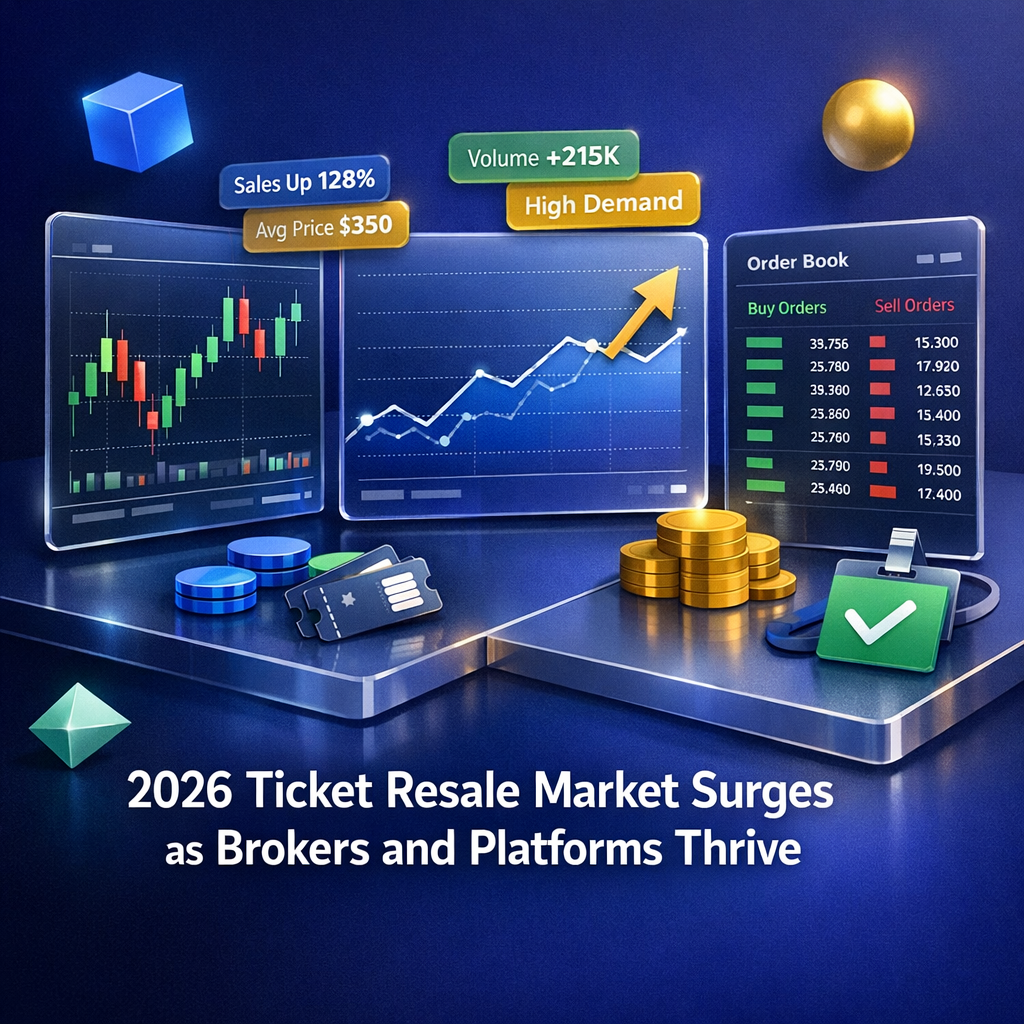
Executive Summary: 2026’s secondary ticket market is delivering robust growth and historic opportunities for professional brokers. StubHub’s global gross merchandise sales (GMS) hit $2.2 billion in Q1 2026—a 7% year-over-year jump—while Vivid Seats saw $612.4 million in gross order volume. Major events and tours are consistently selling out, fueling soaring primary market revenues and deepening inventory for resale. Innovations in pricing, presale management, and real-time analytics continue to empower savvy brokers to act as agile market-makers. Throughout, technology platforms such as ProTickets remain indispensable for professionals who want to maximize profits, stay ahead of the curve, and bring liquidity to this fast-paced, multi-billion-dollar marketplace.
Major Platform Growth Signals a Robust Resale Market
Leading resale platforms are posting strong results that reflect the enduring appetite for live events and secondary tickets. StubHub’s Q1 2026 Gross Merchandise Sales totaled $2.2 billion globally—a 7% gain over Q1 2025. For all of 2025, StubHub’s global GMS was about $9.2 billion, confirming the sheer, ongoing scale of the secondary ticket market. Vivid Seats reported $612.4 million in gross order volume for Q1 2026, together underscoring the huge marketplace opportunity for resellers and market-makers.
Primary market expansion is boosting secondary market inventory. Live Nation, the world’s top concert promoter, reported $3.8 billion in Q1 2026 ticketing segment revenue—a 12% increase over the previous year in North America. By April, Live Nation had already sold 107 million tickets (up 11% YoY) and booked 85% of its large-venue 2026 events. This inflow provides steady supply for professional brokers, supporting healthy trading volumes and robust business pipelines for the months ahead.
Average ticket pricing is also rising, which translates into larger per-sale profits for resellers. StubHub’s Q1 2026 revenue reached $446 million (19% of GMS), improving margins via sustained service fees and favorable mix. Dynamic pricing is the norm: FIFA’s new 2026 World Cup model, for instance, saw some final tickets listed between $9,400 and $11,500 (extreme outliers compared to most listings). Wherever demand spikes, ticket brokers supply essential liquidity and capture meaningful mark-ups—even in the face of short-term price corrections.
Packed Schedules and Diverse Demand Fuel Resale Opportunities
The modern live event calendar is more crowded—and lucrative—than ever for resale professionals. Recent tours by Bruno Mars, Bad Bunny, and Lady Gaga have established new records for global attendance, with Bruno Mars’ “Romantic” tour expected to lead worldwide grosses in 2026 according to Pollstar. Live Nation’s double-digit sales and bookings growth affirms that demand for major touring acts is not abating; the opportunity for secondary brokers is evident wherever primary channels sell out in hours.
Live sports are equally robust. Ticketmaster’s State of Play report indicates that 24% of fans seek “integrated entertainment” and many will travel up to six hours internationally for live games. This willingness to go the distance drives consistently high prices for major playoff games and international tournaments, including the Super Bowl and Champions League. Brokers are ideally positioned to serve these motivated fans, matching scarce inventory to those willing to pay a premium.
Beyond headliner concerts and sports championships, the diversity of events is expanding fast. The 2026 Olympics in Paris, Stanley Cup playoffs, esports tournaments, and niche music festivals are all contributing new streams of inventory and demand. Regional phenomena—such as BTS selling out Mexico City or K-pop and Latin star tours breaking attendance records—demonstrate that brokers unlock access and price discovery across continents. Notably, even as some fans voice concerns about high costs, successful professionals enable transparent price competition and help stabilize market access when demand outpaces supply.
Market conditions are driving average secondary-market ticket prices higher. Live Nation notes, “average show grosses and ticket prices have never been stronger,” while broker platforms are seeing increased per-ticket values in both core and fringe events. This environment, rich with sold-out nights and special event surges, means that even minor-league playoffs or up-and-coming tours offer brokers consistent, high-margin flips when inventory is tightly managed.
Pricing Dynamics and Platform Innovations
Success in 2026’s secondary market demands mastery of fast-moving price dynamics. Dynamic pricing—automated shifts driven by real-time supply and demand—now shapes both the primary and secondary spaces. The FIFA World Cup in particular provided a striking example: some final tickets soared to headline-grabbing five-figure prices (as rare outliers), while many “get-in” prices and mid-tier listings softened as new ticket batches appeared and fan sentiment shifted. Savvy brokers capture opportunity by buying early, reading market cycles, and selling into price peaks.
The proliferation of official resale channels and technology upgrades is making the marketplace more transparent and trusted. Platforms like Ticketmaster are rolling out verified resale partnerships and mobile ticketing improvements, boosting overall legitimacy. For brokers, this means lower fraud risk and deeper buyer pools. However, increased competition from official face-value outlets does mean brokers must pivot: VIP inventory, multi-day festival passes, and premium packages (often outside face-value controls) remain lucrative zones for professionals.
Brokers equipped with data and adaptable tools are best positioned to win. Tools such as real-time dashboards, sales analytics, and presale code management help professionals track “get-in” and average prices, respond instantly to price swings, and discover less obvious high-margin events. Proactive brokers adjust listings based on statistics, fan interest, and demographic signals—transforming volatility into opportunity. Through platforms like those powered by tech leaders, brokers become indispensable market-makers, servicing both die-hard fans and price-conscious buyers alike.
Opportunities for Ticket Brokers
Target High-Demand Events
- Prioritize top-selling tours, opening nights, and playoffs where tickets move fast and demand outpaces supply from day one.
- Secure inventory through early presales—using multiple codes where possible—to take advantage of announced additional dates or sudden tour extensions.
Leverage Dynamic Pricing for Timing
- Monitor “get-in” and average resale prices in real time. Sell into the market as prices crest and before fan fatigue sets in.
- Track supply releases post-onsale or pre-event; adjust position if new inventory softens prices, as seen in recent World Cup cycles.
Diversify into New Event Segments
- Expand beyond traditional concerts and sports. Explore esports, niche festivals, VIP upgrades, parking, and bundled travel packages for international events.
- Scout regional “hidden gems” in emerging genres or untapped cities—these often deliver high ROI for brokers ahead of mainstream rush.
Optimize Operations and Risk Management
- Use automation to manage inventory, monitor cross-market listings, and ensure security—building a strong, trusted reputation among buyers.
- Stay flexible: pivot to new regions or event types if regulations tighten locally. Focus on operational excellence to capitalize on changing legal or market structures worldwide.
Embrace Analytics and Technology
- Adopt robust analytics platforms to identify sell-out trends, forecast hot markets, and manage presale codes efficiently.
- Leverage real-time dashboards (such as those from some platforms) to make informed, rapid decisions, unlocking faster inventory turns and outsized profits season-over-season.
Conclusion
The outlook for ticket reselling professionals is stronger than ever in 2026. With primary and secondary markets growing in tandem, broker-driven liquidity, price discovery, and fan access are at the heart of a flourishing global live events economy. The most successful brokers will be those who ride surges in high-demand events, embrace flexible technology, and stay alert to market and regulatory shifts. ProTickets stands as the go-to platform for professionals who want to capitalize—offering real-time analytics, presale code management, market data, and proven operational playbooks. In a market brimming with opportunity and optimism, prepared brokers continue to serve as the essential link between fans and unforgettable live experiences, while achieving sustained, healthy profits as trusted industry market-makers.
Ähnliche Artikel


Bereit, Ticketbroker zu werden?
Treten Sie ProTickets bei und erhalten Sie Zugang zu professionellen Tools, Live-Daten und Insider-Strategien, denen Top-Wiederverkäufer vertrauen.
Kostenlos loslegen