
Executive summary
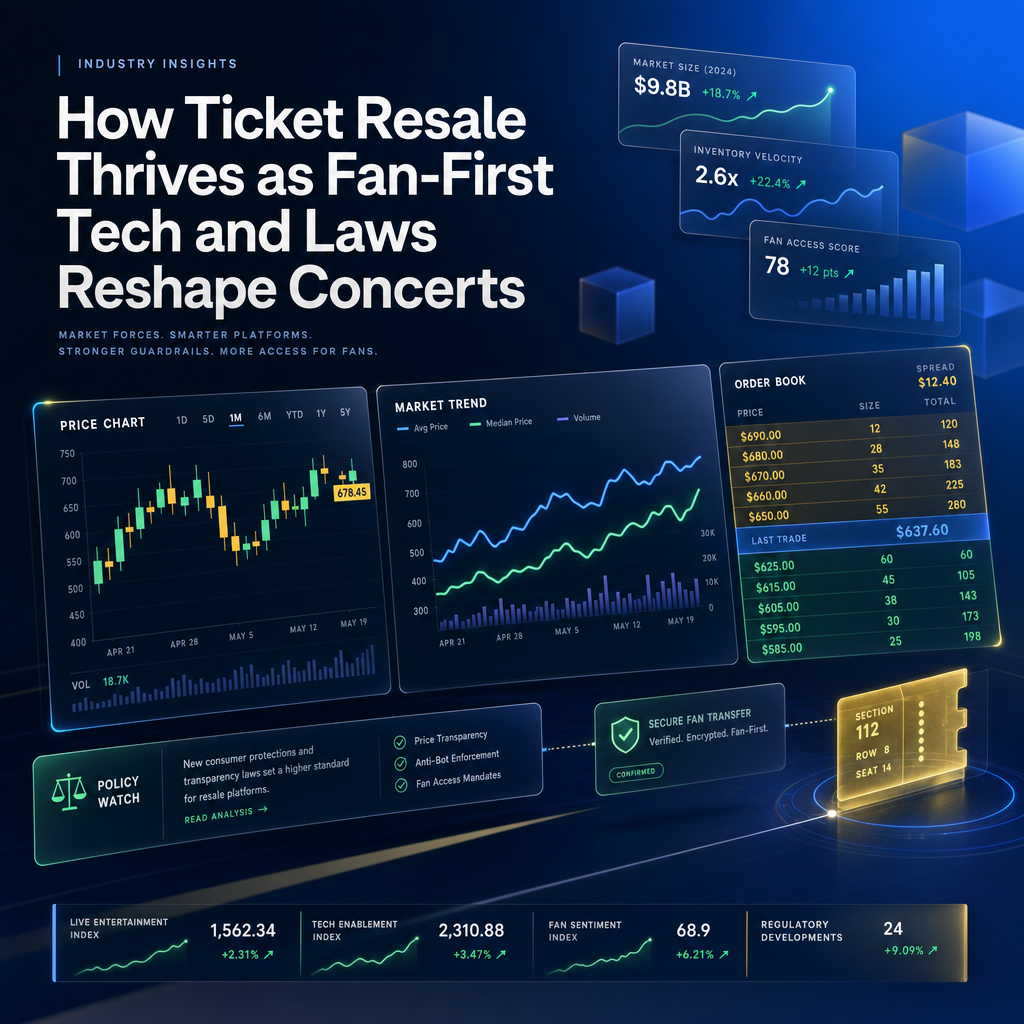
Live event demand remains staggering. Live Nation reports a 20% jump in global concert attendance to 145 million in 2023, while major stadium tours by Taylor Swift and Beyoncé continue to sell out worldwide. The primary tour market is a multibillion-dollar business; for instance, Live Nation’s annual revenues run into the tens of billions—its $280 million legal settlement represents less than four days’ worth of 2025 transactions. The secondary market also moves immense volume; StubHub reported $1.77 billion in revenue for FY2024, and its recent public listing valued the company at $8.1 billion. These numbers confirm that professional ticket resellers drive vital market liquidity, making sold-out events accessible for fans and powering thousands of entrepreneurial careers in a global ticketing industry worth $20–30 billion.
The landscape is shifting ever more toward fan-first approaches and advanced ticketing technology. Spotify’s upcoming Reserved ticket initiative ties presales to streaming engagement, rewarding actual fans. Ticketmaster is releasing richer mobile ticket experiences, including collaborations with Google Wallet for feature-packed passes and the expansion of “Verified Resale” channels with 0% seller fees to build trust around secondary transactions. Resale itself is modernizing, with official channels giving brokers new ways to execute and optimize listings.
Meanwhile, local regulatory changes such as Massachusetts’ proposed 110% resale cap and Washington D.C.’s 10% over-face markup law highlight regional shifts, but also present clear jurisdictional opportunities. Professional brokers can use analytics to navigate around over-regulated zones, deploying inventory in higher-opportunity markets, and leveraging resources like presale code libraries to stay ahead. With real-time market insights from platforms like ProTickets, brokers readily adapt their strategies to identify the next profit center.
In sum, the environment strongly favors those who track trends and act decisively. The secondary ticket trade remains vast, and innovation in presales and platform technology are steadily creating more avenues to thrive. For brokers leveraging analytics, presale management, and playbook-driven execution, the road remains open to steady growth and healthy profits as live entertainment continues to boom.
Fan-priority presales unlock new signals
Platforms and artists are now translating fan data directly into ticket sales. Spotify’s Reserved program, launching in mid-2026, is set to offer top listeners fee-free access to exclusive presales based on streaming behavior, with each top fan eligible for a 24-hour window to claim up to two tickets. This system shifts advantage from bots or first-come buyers toward true fans—but also signals brokers where the hottest demand will be.
Savvy brokers can harness this data as an intelligence tool. The presence of Reserved slots or other fan-priority presales flags an elevated interest artist—prompting brokers to deploy fast-acquisition tactics: leveraging presale code pools, multiple accounts, and automated purchase scripts to secure inventory as soon as the wider onsale hits. Conversely, shows not selected for fan-prioritized access may experience less direct competition, giving brokers straightforward access to general onsale inventory and enhancing resale margin potential.
Ticketmaster’s evolution in Verified Fan presales and lottery systems for mega-events (Taylor Swift, Beyoncé, and similar acts) likewise creates both competition and opportunity. For brokers, persistent tracking of fan-club and unique presale offerings—credit card partnerships, radio promotions, and artist-backed lists—opens more avenues to scoop up pre-release stock. Analytics-driven platforms such as some platforms amplify this edge by highlighting real-time priority codes and offering event demand tracking based on public engagement data, streaming spikes, or pop-culture momentum.
Fan clubs, artist websites, and sports team apps increasingly offer tailored presale opportunities too. Brokers who strategically aggregate or access curated presale code libraries gain a crucial lead—staying ahead of generic public onsales. The trend is clear: higher fan engagement and more granular presale targeting enhances inventory acquisition opportunities for brokers who remain plugged into these fan ecosystems.
Ticketmaster innovations – from passes to verified resale
Platform innovation is building both buyer confidence and broker advantage. Ticketmaster’s upcoming partnership with Google Wallet introduces customizable digital ticket passes that store rich branding—such as album artwork or team logos—plus up to 12 direct links to event-related content (parking, venue maps, food services). These features make both primary and secondary tickets more legitimate-looking and trustworthy in the eyes of fans, easing transactional friction for professional resellers.
Importantly, Ticketmaster is rapidly developing its Verified Resale and Face-Value Exchange channels. These official resale outlets—notably offered at 0% seller commission—allow brokers to maximize net returns, while providing buyers with the assurances and buyer-protections synonymous with primary platforms. While some exchanges restrict profit potential via face-value-only rules for certain artists, most verified resale programs enable regular margin for brokers and attract buyers seeking authenticity. As a result, listing through these channels can mean quicker, fee-free sales to a risk-averse customer base, while parallel listings on major secondaries (StubHub, Vivid Seats, SeatGeek) capture price-conscious and high-bid buyers.
The impact is significant: digital ticket transfer programs and marketplace technology (from Ticketmaster Connect APIs to SeatGeek’s automated tools) not only lower chargeback and fraud risk for brokers, they streamline operations. A seamless resale environment, improved guarantees for buyers, and interconnected mobile management tools all raise the market “tide,” driving up volume and smoothing transactions for professionals who keep pace with tech developments.
Reading the market: demand signals and seat-chart cues
Market outperformance comes from reading demand signals with precision. The phenomenon known as “Blue Dot Fever” illustrates how brokers can make or save substantial margin. Digital seat maps now show unsold tickets as blue dots—if persistent clusters remain close to showtime, it’s a red flag. Some tours with large unsold blocks have downsized or canceled shows. Brokers using real-time inventory scanners can swiftly identify weakening events, adjust pricing, or unload stock before values slide.
Conversely, events where blue dots quickly disappear signify robust demand, allowing brokers to confidently hold inventory and command higher prices. Real-time seat tracking and velocity analytics empower brokers to make smarter hold-or-sell decisions right up to event day, fine-tuning strategies with every refresh of the chart.
Price volatility offers real-world lessons. After the U.S. and Mexico exited the 2026 World Cup, quarterfinal ticket resale prices dropped approximately 50%, as Spain-Belgium seats slid from $3,261 to $1,381. Such swings are commonplace with international sports, where underdogs or upsets quickly deflate certain ticket segments. Attuned brokers use these cues—along with social media chatter, tour buzz, and betting odds—to time acquisitions and avoid holding inventory set to decline. Instant access to event momentum (via audience reviews, trending news, or artist social spikes) flags whether to adjust pricing up or down.
Growing event diversity adds opportunity as well. Comedy tours, gaming tournaments, speaker panels, and podcast live shows are all surging. These segments often feature less competition and more predictable seat-value trends, presenting prime inventory opportunities for data-driven brokers who spot tour announcements early. By leveraging market filters for niche or emerging segments and correlating social metrics to ticket uptake, professionals can lock in positions before the broader market catches on.
At its core, the art of brokering is about blending real-time analytics with intuition. some platforms let professionals overlay seat charts, stream counts, and price velocity, maximizing adaptability. The most successful brokers constantly recalibrate, double down on proven events, cut losses when indicators sour, and always scan for emerging opportunities.
Opportunities for brokers
- Exploit new presales: Build and automate presale code collections covering Spotify, fan clubs, credit card access, and more, so inventory is in-hand before public onsales. Be ready to deploy rapid acquisition tools—multiple logins, session scripts, and robust device setups—especially for events flagged by fan-priority releases. With the right presale toolkits, even non-fan brokers can compete on quick access.
- Leverage verified resale for margin: Use Ticketmaster Verified Resale and equivalent official channels to list inventory with no seller fees and strong buyer trust. Cross-list on major secondaries to ensure broad exposure. Official resale often appeals to high-value, risk-averse customers (families, corporate clients), driving fast sell-through at minimal cost.
- Hedge with dynamic pricing: Sports events with uncertain outcomes demand real-time pricing adaptation. If a concert or tournament sees unexpected shifts (an underdog run, viral artist moment, national team exit), brokers can adjust listing prices instantly—raising prices when demand spikes, or selling out early as soon as conditions change. Using event monitoring tools or predictive analytics gives brokers the edge to capitalize on shifts before the crowd reacts.
- Expand beyond local regulations: If local caps like Massachusetts’ or D.C.’s price limits take force, brokers can expand focus to friendlier states or international events. Out-of-state partnerships, multi-jurisdictional accounts, and cross-border brokering help sidestep stagnant markets and capture opportunity elsewhere. Internationally, cross-listing (e.g. U.S.-origin tickets on global platforms for U.K., Australian, or Canadian shows) remains a major revenue lever as regional rules diverge.
- Develop networks and premium experiences: Brokers who build branded presence—fan communities, content channels, loyalty deals—attract direct buyers and cement expertise. Some are hosting viewing parties, travel packages, or concierge services tied to event tickets, offering tangible value beyond the sale. Creative approaches can both deepen relationships and unlock premium pricing from dedicated fan bases.
- Invest in advanced tools: Best-in-class brokers use some platforms for market analytics, real-time chart scanning, and presale management. Scrapers identify “blue-dot” risks; dashboards benchmark market price history; code libraries keep brokers organized season after season. Technology turns every market twist into actionable insight, ensuring resellers operate lean, fast, and competitively.
Furthermore, while the regulatory narrative may draw scrutiny, professional brokers are indispensable market-makers. They bridge the gap between primary sale scarcity and true fan demand—efficiently reallocating inventory to those who value it most. By continuing to innovate, collaborate with fan communities, and leverage modern broker platforms, the profession’s legitimacy and relevance will only rise.
Conclusion
Professional brokers who embrace data, technology, and market adaptation are poised for lasting growth, no matter the market fluctuations. Innovations like streaming-based presales, fan-first ticket allocation, and official digital resale all point toward a smarter, more transparent ticketing market where well-prepared brokers thrive. The secondary trade remains decisive for providing fans with access to high-demand events and real-time price discovery, across a global market that moves billions in transaction value every year.
With flexibility—tuning inventory strategies to “blue dot” trends, rapidly claiming presale inventory, and moving into new event niches—brokers can reap the upside of every twist in fan demand. Technology and thoughtful networking keep margin paths open, while regulatory shifts become just another variable for analysis and action. ProTickets is the go-to platform empowering top brokers, offering real-time analytics, presale management, and proven playbooks that transform fast-changing markets into steady profit. Fan-first innovation has unlocked new advantages—and prepared brokers are primed to flourish, serving fans and driving the next wave of business expansion in live events.
Gerelateerde artikelen


Klaar om ticketbroker te worden?
Sluit je aan bij ProTickets en krijg toegang tot pro-tools, live data en insider-strategieën die door topverkopers worden vertrouwd.
Gratis aan de slag