
Executive Summary
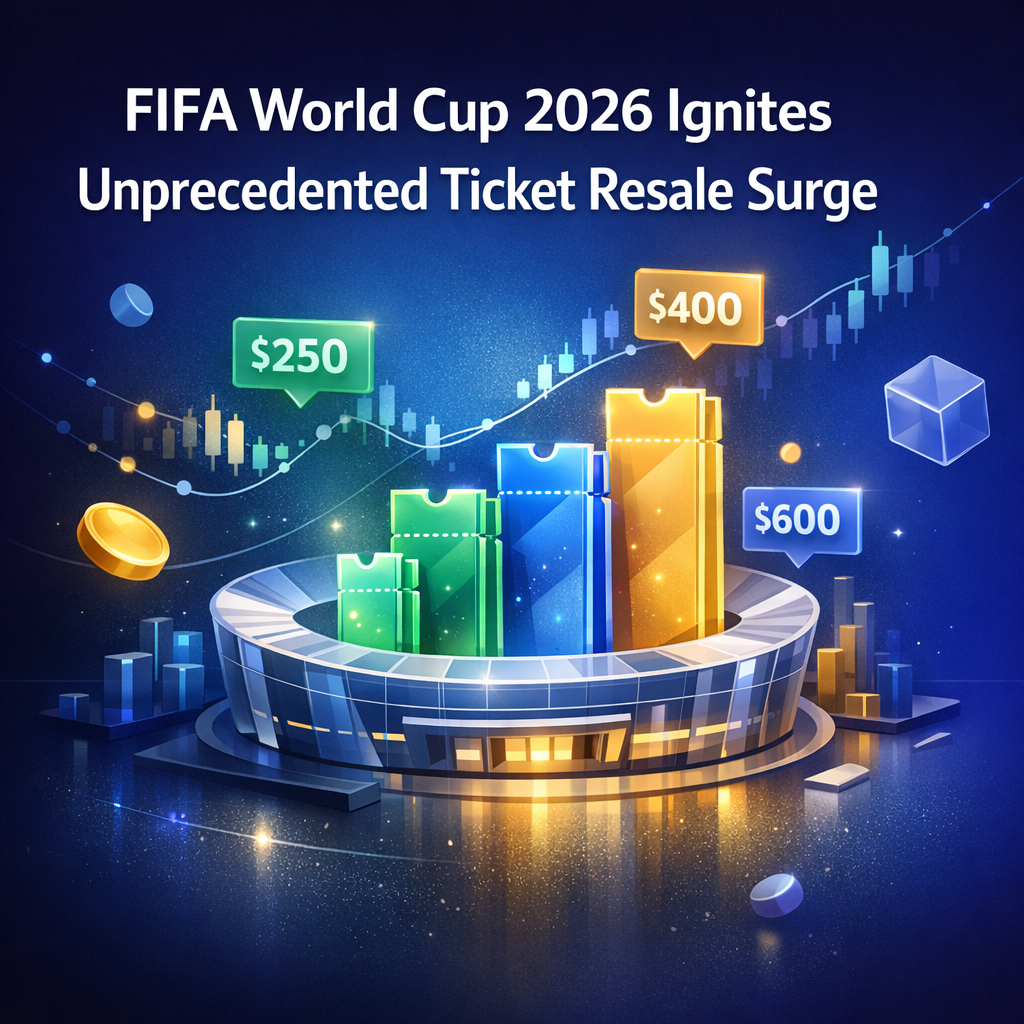
Brokers are seizing an unprecedented opportunity as the 2026 FIFA World Cup catalyzes a surge across the ticket resale market. Four seats to the World Cup final in New Jersey, for instance, have been listed on FIFA’s official resale platform for just under $2.3 million each, while even early group-stage matches demand as much as $4,105 for premium positions and start at a robust $380 for entry-level seats. These extraordinary figures reveal a market where demand is outstripping supply at every tier. In the broader landscape, secondary NFL ticket prices in North America have soared by 173% (inflation-adjusted) between 2015 and 2025, as reported by Axios, illustrating a consistent upward trajectory in fan spending for high-visibility events.
This boom is not limited to soccer. Nostalgia acts are staging major comebacks, with Axios highlighting at least ten top-tier artists returning to U.S. stages after hiatuses of five or more years, driving ticket scarcity and premium resale pricing. Meanwhile, women’s and emerging sports are drawing unprecedented crowds: Kansas City’s record of 10,518 fans for a U.S. women’s rugby match last year epitomizes this surge. Each full stadium signals sellouts and fierce competition for access, placing brokers at the heart of fan engagement by providing liquidity and expanding access when primaries close or migrate to digital-only systems.
Technology is further empowering secondary-market professionals. AI-driven metasearch tools now scan dozens of resale sites to instantly identify the best all-in prices, while dynamic primary pricing (like FIFA’s model, which has already doubled many top price points) ensures volatility and new windows for arbitrage. This environment heavily favors savvy brokers utilizing analytics to spot and act on undervalued inventory ahead of the crowd, aided by tools automating complex price discovery that formerly required manual effort.
For brokers, confidence and preparation are crucial. Platforms such as ProTickets deliver real-time data, manage intricate presale codes, and offer proven playbooks, enabling professionals to act decisively on hot opportunities. In this high-momentum climate, well-informed brokers can optimize inventory, control risk, and realize aggressive margins. The live-event sector is resurgent—those who remain proactive and strategic are positioned for substantial, sustainable growth.
World Cup 2026: A Resale Frenzy
The 2026 FIFA World Cup promises to be a landmark opportunity for secondary-market professionals. FIFA’s embrace of dynamic pricing has lifted face-value ticket costs to unprecedented levels: the World Cup final’s top-tier ticket climbed from $8,680 after the initial draw to $10,990 during the spring reopening of sales, with similar jumps in Category 2 ($5,575 to $7,380) and Category 3 ($4,185 to $5,785) seats. Early acquirers stand to reap significant windfalls as these premiums filter through to the resale landscape.
FIFA’s official resale marketplace imposes a 15% transaction fee on both buyers and sellers but notably does not set price ceilings. This allows tickets to be listed at extraordinary levels—like the recent $2,299,998-per-seat listing for a block of four in the final, an explicit outlier illustrating the top end of market willingness. International demand is especially robust, fueled by travel costs to host cities across the U.S., Canada, and Mexico.
After primary market releases—often marred by system glitches and rapid "sells"—fans immediately pivot to the secondary market, driving further premium. Brokers who monitor ticket-drops and supply-side shocks (such as the late-stage "last-minute sales" window or surprise primary sellouts) can move quickly, posting on global platforms like Ticketmaster Exchange, StubHub, SeatGeek, and Viagogo to capture peak buyer urgency. Notably, FIFA's fee structure essentially matches industry standards, allowing brokers the flexibility to list elsewhere without significant additional cost. This ecosystem of high demand and uncapped pricing offers a dynamic and lucrative arbitrage environment for professionals ready to capitalize.
Beyond Soccer: Nostalgia Tours and Emerging Sports
Live-event demand is diversifying well beyond the world’s most-watched soccer matches. Axios reports that at least ten major touring artists will headline U.S. venues in 2026 after extended hiatuses, sparking intense nostalgia-driven ticket demand. Even artists outside the Taylor Swift echelon—whose 2023-24 Eras Tour grossed over $2 billion globally—are expected to command sellouts and high resale value. For brokers, this means immediate opportunity by leveraging presale access and relisting as soon as inventory dries up post-onsale.
Emerging fan bases are generating impressive numbers, especially in women’s and niche sports. U.S. women’s rugby achieved an all-time attendance record with 10,518 fans in Kansas City last year, and women's soccer and basketball events (NCAA, WNBA) are routinely packing arenas. Each of these spikes in turnout translates to a rapid sellout of available inventory, creating shortages only the secondary market can address efficiently. Brokers who recognize these trends and act before mainstream pricing catches up are in an excellent position to capture first-mover profits.
Looking forward, professionals should diversify beyond super-acts into standup comedy, esports, college championships, and emerging leagues. New fan communities are underserved by primary sellers, allowing brokers to become essential connectors between supply and demand. Consistent success means tracking social trends, team announcements, and local news, ensuring your inventory pipeline aligns with both legacy blockbusters and tomorrow’s breakout events.
Regulation, Trust, and the Broker Opportunity
Recent regulatory shifts are transforming the landscape, frequently strengthening the position of legitimate brokers. Illinois, for instance, enacted a law banning speculative ticket listings unless sellers possess the tickets outright, but it does not limit the price itself. Other governments—such as in Canada, the UK, and Australia—are advancing parallel measures focused on reducing fraud and curtailing bot-driven purchases. These frameworks distinctly benefit professionals who acquire inventory in advance and use verifiable delivery mechanisms.
In this climate, trust is a crucial differentiator. Brokers should proactively highlight compliance and authenticity: clear ticket confirmations, platform verification, and robust refund guarantees reassure buyers anxious about scams. As digital-only tickets and identity checks become the norm, the broker who communicates reliability and regulatory alignment stands out from fly-by-night operators. Monitoring new laws and adapting operational practices—such as spreading purchases across multiple accounts, forming strategic partnerships, or requiring upfront deposits—empowers brokers to both mitigate risk and foster consumer confidence.
By reframing compliance requirements as quality assurances, forward-thinking brokers convert regulation into a marketing asset. Transparency and customer care are, increasingly, as vital to market share as inventory access and pricing strategy.
Opportunities for Brokers
- Secure hot-event inventory early. Leverage fan club presales and exclusive offers to lock up tickets for marquee events—World Cup matches, major playoffs, blockbuster tours—before primary sellouts. With regulatory trends prioritizing tickets in hand, early acquisition equates to premium market control and minimized compliance exposure.
- Exploit dynamic pricing shifts. Track events where primary sellers adjust prices by sales phase. If a World Cup seating block jumps from $8,680 to $10,990 overnight, brokers who bought at earlier price points enjoy instant margin. Reinforce strategy with repricing tools or split-testing various price tiers during resales to identify optimal sweet spots.
- Harness analytics and AI-powered platforms. Use automated tools to compare all-in prices across Ticketmaster, StubHub, SeatGeek, and others, surfacing arbitrage opportunities and competitive gaps in real time. some platforms supply live data, event analytics, and presale updates, positioning brokers to spot and seize fast-changing demand.
- Diversify into growth segments. Expand inventory to encompass rising niches: women’s leagues, esports, standup, and political events. Early investment in these areas often yields high resale multiples as mainstream distributors lag behind surging demand. Social monitoring and local sources are key to spotting the next breakout event.
- Prioritize safety, authenticity, and trust-building. Differentiate your listings by guaranteeing ticket authenticity, instant verification, and robust refund policies. Highlight compliance with emerging regulations—buyers faced with widespread scam alerts will pay a premium for peace of mind. Turn regulatory adherence into a core marketing pitch: "Real tickets, guaranteed entry, or your money back."
- Maximize distribution channels. Cross-list inventory on multiple reputable platforms (Ticketmaster Exchange, SeatGeek, StubHub, Vivid Seats, and others) to maximize reach and drive pricing discovery. Explore official team and artist-managed resale exchanges where permitted, and consider premium VIP options for high-end events. Broad channel exposure equalizes supply constraints with robust buyer demand.
- Approach inventory allocation with agility. Scale inventory commitment in proportion to event predictability and risk. For certain sellouts, take larger positions; for experimental or emerging events, diversify in smaller blocks. Use hedging strategies (buying across seat categories or alternative cities) and monitor sentiment and news cycles ready to adjust as opportunities change. Smart risk management unlocks profit while preventing excessive capital lockup.
Conclusion
The market outlook for ticket brokers has never been more bullish. Across global live events, participants are consistently paying record premiums for access to in-demand shows and sporting spectacles—AP News has cited multi-million-dollar World Cup finals and playoff seats as prime examples, although these should be seen as rare outliers rather than everyday benchmarks. In this landscape, professional brokers are legitimate market-makers, ensuring liquidity and facilitating access where the primary market cannot.
Backed by robust analytics, evolving technology, and dedicated platforms such as ProTickets, secondary-market professionals are uniquely equipped to match buyers with the experiences they crave. The live-event economy points firmly upward, with new fan bases, legacy acts, and data-driven tools propelling the business forward. Successful brokers will be those who innovate, remain transparent, and stay ahead of compliance. As this golden age of ticketing unfolds, entrepreneurial brokers—armed with intelligence and adaptability—are set to define the next era of live-event commerce. The opportunity is clear: strategic, market-savvy professionals will shape and profit from the future of ticket resale.
Related articles
Ready to become a ticket broker?
Join ProTickets and get access to pro-grade tools, live data, and insider strategies trusted by top resellers.
Get started for free