
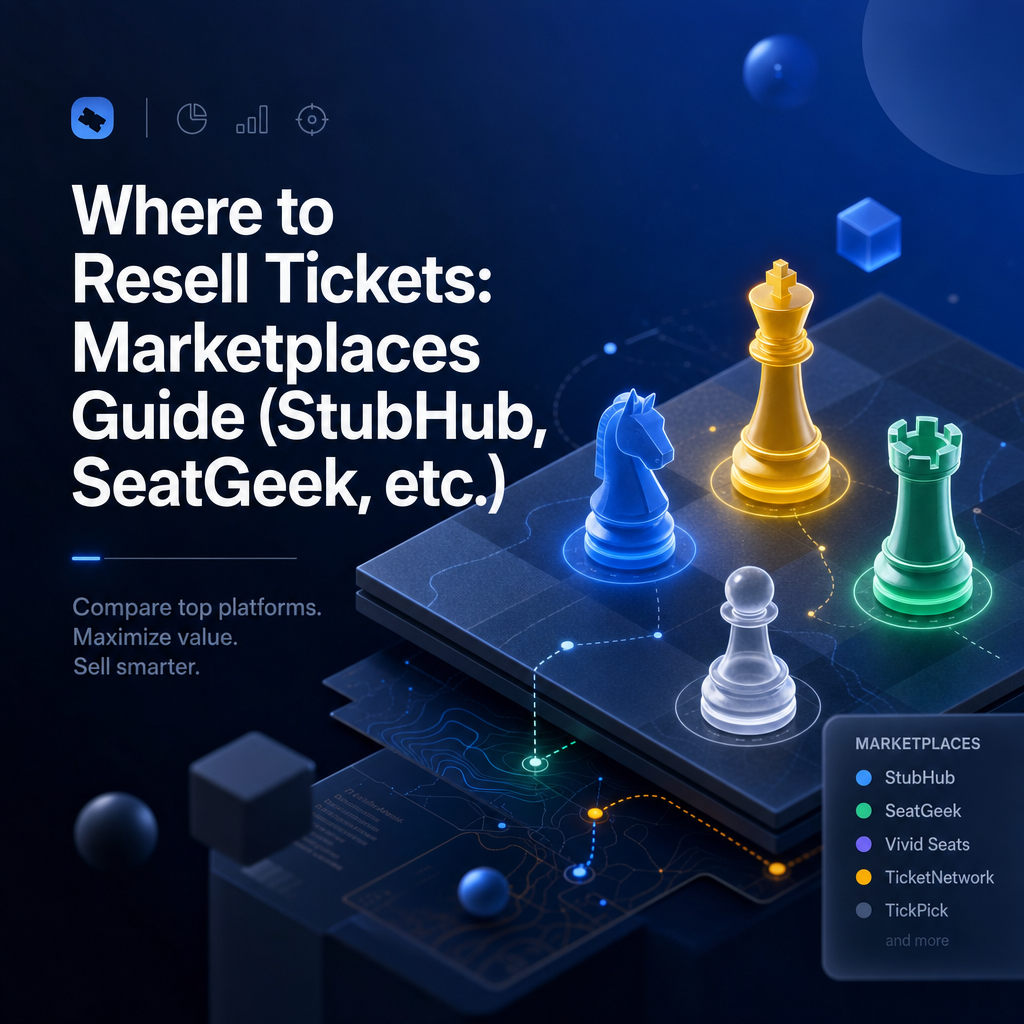
Buying the right tickets is only half the job. Where you list them decides how fast they sell, how much you net after fees, and how often you get paid on time. This guide compares the major ticket resale marketplaces so you can match each listing to the platform that maximizes your profit.
Fees and policies change often, so treat the numbers below as typical ranges and always confirm current rates on each platform before you price.
Factors to Consider When Choosing a Resale Platform
- Fees: seller commission plus any buyer-side fees affect both your payout and your competitiveness on price.
- Audience size: bigger buyer traffic means faster sales, especially for mainstream events.
- Payout speed: some pay shortly after the sale, others only after the event. This drives your cash flow.
- Buyer and seller protection: guarantees build buyer trust but can shift risk and penalties onto sellers who cannot deliver.
- Listing and bulk tools: if you scale, you need fast listing, price syncing, and multi-listing support.
- Category fit: some platforms skew toward concerts, others toward sports.
The Major Ticket Resale Marketplaces
StubHub
The largest and best-known secondary marketplace, with huge buyer traffic across concerts and sports. Great for selling fast, but seller fees (commonly in the 10 to 15 percent range, on top of buyer fees) are among the higher ones, and payout is typically after the event.
- Best for: fast sales and maximum reach.
- Watch out for: higher fees and delayed payouts.
SeatGeek
A fast-growing, mobile-first marketplace with a clean interface and strong app traffic. Seller fees are competitive, and its Deal Score helps buyers feel confident on price, which can speed up sales.
- Best for: reaching younger, mobile buyers with solid fees.
- Watch out for: smaller audience than StubHub in some markets.
Ticketmaster Fan-to-Fan Exchange
Reselling directly on Ticketmaster keeps tickets in the official platform, which buyers trust, and transfer is seamless for events that allow it. Fees can be significant and resale is sometimes restricted or price-capped by the event or artist.
- Best for: trust and frictionless delivery on eligible events.
- Watch out for: resale restrictions and price caps on some events.
Vivid Seats
A large marketplace with strong sports demand and a rewards program that brings buyers back. Reach is solid, though seller economics and payout timing are comparable to other big platforms.
- Best for: sports inventory and broad reach.
- Watch out for: fee levels similar to the larger players.
TickPick
Known for a no-buyer-fee model, which can make your listings more attractive on total price. Often favorable for sellers, with a growing but smaller audience than the giants.
- Best for: competitive all-in pricing and seller-friendly terms.
- Watch out for: smaller reach, so sales can be slower for niche events.
Gametime
A mobile-first, last-minute marketplace popular for buyers grabbing tickets close to event time, especially sports. Useful for moving inventory in the final days before an event.
- Best for: last-minute sales and mobile buyers.
- Watch out for: less ideal for selling far in advance.
How to Choose the Right Marketplace for Your Tickets
Match the ticket to the platform. For mainstream concerts you want fast turnover, lead with the high-traffic marketplaces like StubHub and SeatGeek. For sports, Vivid Seats and Gametime pull strong demand. If your margin is thin, a lower-fee or no-buyer-fee platform like TickPick can make your price more competitive and protect your net. When delivery and trust matter, the official Ticketmaster exchange can convert buyers who hesitate elsewhere.
Pro Tips to Sell Faster and for More
- List on multiple marketplaces to maximize exposure, but track your listings so you never sell the same seats twice (a costly mistake that triggers penalties).
- Price to the floor, not your hopes. Buyers sort by price, so being a few dollars under the current floor often sells you first.
- Factor fees into your price before listing so your net, not your gross, hits your target.
- Deliver instantly when possible. Mobile transfer and fast fulfillment improve your seller rating and reduce cancellations.
- Adjust as the event nears. Re-price based on how the market moves rather than setting and forgetting.
How ProTickets Helps
ProTickets helps you track live pricing and demand across events so you know what your tickets are really worth before you list, and when to adjust. Pair smart event selection with the right marketplace, and you keep more of every sale.
FAQ: Where to Resell Tickets
Which marketplace has the lowest fees?
It varies and changes, but no-buyer-fee models like TickPick are often the most seller-friendly on total price. Always confirm current seller commission and any buyer fees before pricing.
Should I list on more than one platform?
Yes, multi-listing speeds up sales, as long as you carefully de-list everywhere the moment a ticket sells to avoid double-selling.
When do I get paid?
Most major marketplaces pay after the event takes place. If cash flow matters, factor that timing into how much inventory you hold at once.
Conclusion
There is no single best marketplace, only the best one for a given ticket. Weigh fees, audience, payout speed, and protection, then route each listing to where it sells fastest for the most net profit. Confirm current fees before you price, list smart, and let ProTickets tell you what your tickets are worth so you never leave money on the table.
Related articles

Ready to become a ticket broker?
Join ProTickets and get access to pro-grade tools, live data, and insider strategies trusted by top resellers.
Get started for free