
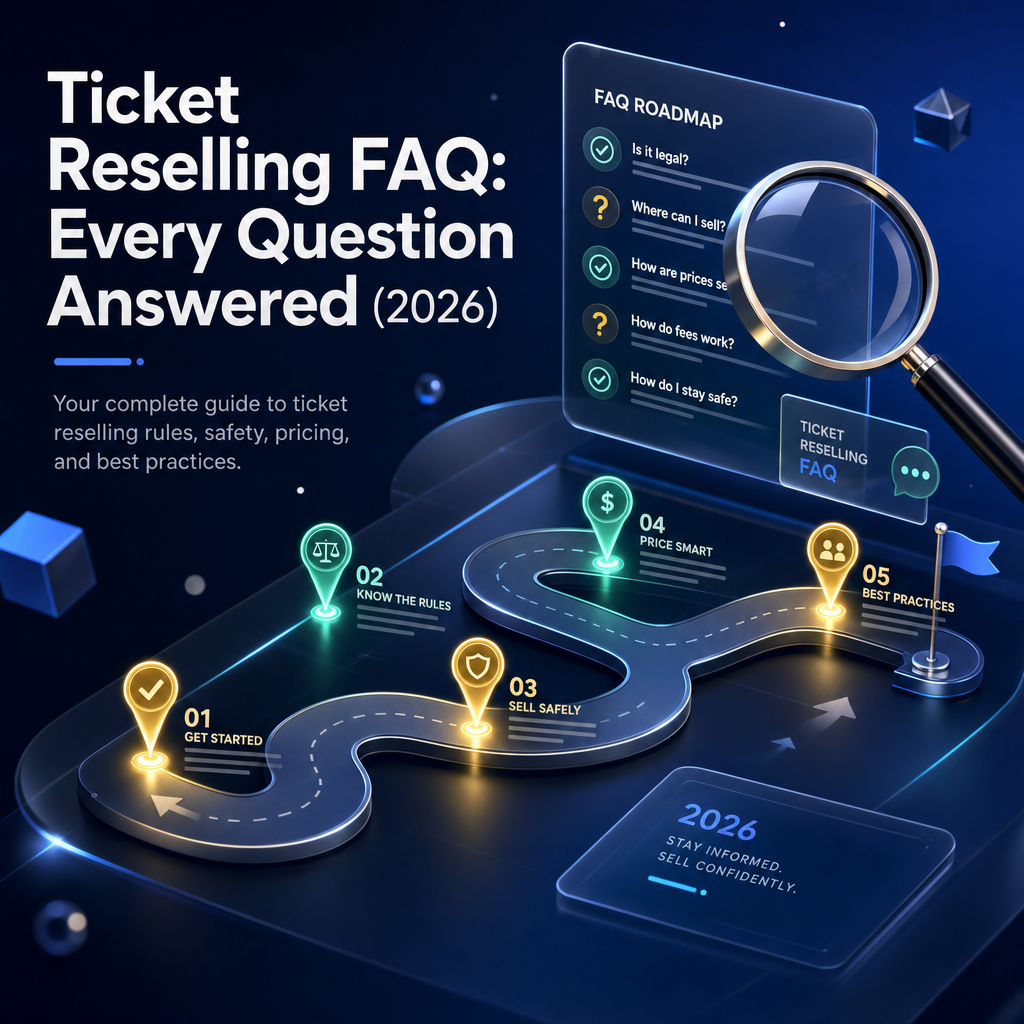
Ticket reselling is one of the most misunderstood side businesses out there. Half the questions people ask are answered with myths, and the other half are never answered at all. This FAQ fixes that. It covers the legal basics, the boring but important stuff like taxes and business structure, the platforms that actually pay out, and the practical risks that quietly drain profit if you ignore them.
Everything below is written to be accurate and neutral. Reselling tickets can be a legitimate business when you follow the law and respect venue rules, and this guide is built around doing it the right way. Wherever a tool genuinely helps, we point it out, but the goal here is to answer your questions, not to sell you anything.
Legal and business basics
Is ticket reselling legal?
In most of the United States, yes, reselling a ticket you legitimately purchased is legal. The key federal law is the BOTS Act of 2016 (Better Online Ticket Sales Act), which does not ban reselling. What it bans is using automated bots to bypass purchase limits, security measures, or queue systems during a public onsale. So the act of reselling is fine, but the method you use to acquire tickets matters a great deal.
Are there state laws or price caps I need to know about?
Yes, and this is where people get caught off guard. Resale rules vary by state. Some states require resellers to be licensed, some require clear refund policies, and a few historically placed limits on markups for certain events. New York, for example, has long had detailed ticket resale legislation and has experimented with caps and disclosure rules over the years. Other states focus on speculative ticket sales (selling a ticket you do not yet own) or on hidden fee disclosure. Always check the current rules in the state where the event is held, because legislation in this space changes frequently.
Do venue and Ticketmaster rules override the law?
They do not override the law, but they absolutely govern whether your tickets stay valid. A reseller can be fully legal and still get tickets cancelled for breaking a venue's terms of service. Many primary sellers, including Ticketmaster, set purchase limits per account or per credit card, restrict transfers on certain events, and reserve the right to cancel orders they believe were bought for resale against their rules. Read the fine print on every onsale. The law tells you what is legal, but the terms of service tell you what will actually get honored at the door.
Should I form an LLC or stay a sole proprietor?
If you are testing the waters with a handful of tickets, operating as a sole proprietor is the simplest path. You report income on your personal return and there is no formation paperwork. Once volume grows, an LLC becomes attractive for two reasons: liability separation (your personal assets are more insulated from business disputes) and credibility (some wholesale and broker relationships prefer a registered business). An LLC also makes bookkeeping cleaner. Talk to an accountant before you decide, because the right structure depends on your volume, your state, and your risk tolerance.
Do I need a business license or reseller permit?
It depends on your state and city. Some jurisdictions require a specific ticket reseller license, and some require a general sales tax permit because resold tickets can be taxable. The marketplace you sell on may collect and remit some taxes for you, but that does not automatically cover your local licensing obligations. Check your state's department of revenue and your city's business licensing office before you scale.
How do taxes work, and what is the 1099-K threshold?
Resale profit is taxable income, full stop. You owe tax on your gains whether or not you receive a form. The form most resellers see is the 1099-K, issued by payment platforms and marketplaces. The reporting threshold has been a moving target in recent years as the IRS phased changes in, so the dollar amount that triggers a 1099-K in any given tax year can differ from the year before. The safe approach: keep records of every purchase and sale, track your cost basis, and assume your activity is reportable. If you sold at a loss on a personal ticket, that is treated differently from running a profit-seeking business, so good records protect you either way.
Getting started
How do I start reselling tickets with no experience?
Start small and start local. Pick one or two events you understand, ideally in a genre or a venue you know well, and buy a small number of tickets at face value during a public onsale. List them on a reputable marketplace, watch how the price moves as the event approaches, and learn how payouts and fees actually feel. The mistake new resellers make is going wide and heavy on day one. Build a feel for demand on a few events first, then scale the patterns that worked.
How much money do I need to begin?
You can start with a few hundred dollars, but a more comfortable starting bankroll is the cost of three to five pairs of tickets plus a buffer for events that sell slower than expected. Tickets tie up cash until they sell, so never put in money you need for rent. A realistic beginner approach is to treat your first batch as tuition: the goal is to learn the mechanics and your local market, not to get rich in week one.
How much can I realistically make?
Honest answer: it varies enormously, and most beginners overestimate. A part-time reseller working evenings might net a few hundred to a couple thousand dollars a month after fees, taxes, and the inevitable events that sell at a loss. Full-time brokers with capital, data, and presale access can do far more, but they also carry far more risk and unsold inventory. Margins per ticket are often thinner than people imagine once you subtract marketplace fees (frequently 10 to 25 percent on the sell side), payment processing, and the duds. Plan for losers to eat into your winners.
How do I pick events that will actually resell?
Demand is everything, and demand leaves a data trail. Look at how fast a comparable past event sold, how the artist or team is trending, the venue capacity (smaller rooms create scarcity), and whether the onsale sold out or lingered. Sentiment matters too: a surprise album, a farewell tour, or a deep playoff run can spike demand overnight. The resellers who win consistently treat event selection as research, not a hunch. Comparing current availability and historical pricing across similar shows is how you separate a likely winner from a money pit.
Buying and access
How do brokers get tickets before everyone else?
The honest answer is presales, not magic. Most high-demand events run multiple presale windows before the general onsale: artist fan presales, credit card presales (Amex and others), venue or fan club presales, and promoter presales. Each requires a code or a qualifying card. Brokers track which presales exist, when they open, and which codes apply, then they show up early and prepared. There is no legal shortcut that beats simply knowing the calendar better than the next person. Tools that aggregate presale codes and dates, like the presale code database and presale calendar inside ProTickets, exist precisely because that knowledge is the real edge.
How do I find upcoming presales and codes?
Presale information is scattered across artist mailing lists, social posts, fan forums, and credit card portals. Serious resellers consolidate it. A presale calendar with notifications tells you when a window opens so you are sitting at your keyboard at the right minute, and a maintained code database saves you from hunting for a working code at 9:59 a.m. ProTickets bundles a presale code database, a community, and a presale calendar with notifications for exactly this reason. The point is preparation: the people who get good seats are the ones who knew the window existed a week in advance.
Can I use bots to buy faster?
No. Using automated bots to bypass purchase limits or queues during an onsale is exactly what the BOTS Act prohibits, and marketplaces and primary sellers actively detect and cancel bot purchases. Beyond the legal exposure, it is a fast way to lose accounts and inventory. Everything in this guide assumes you buy as a real person following the rules. Speed comes from preparation, presale access, and being organized, not from breaking purchase systems.
How many tickets can I buy per event?
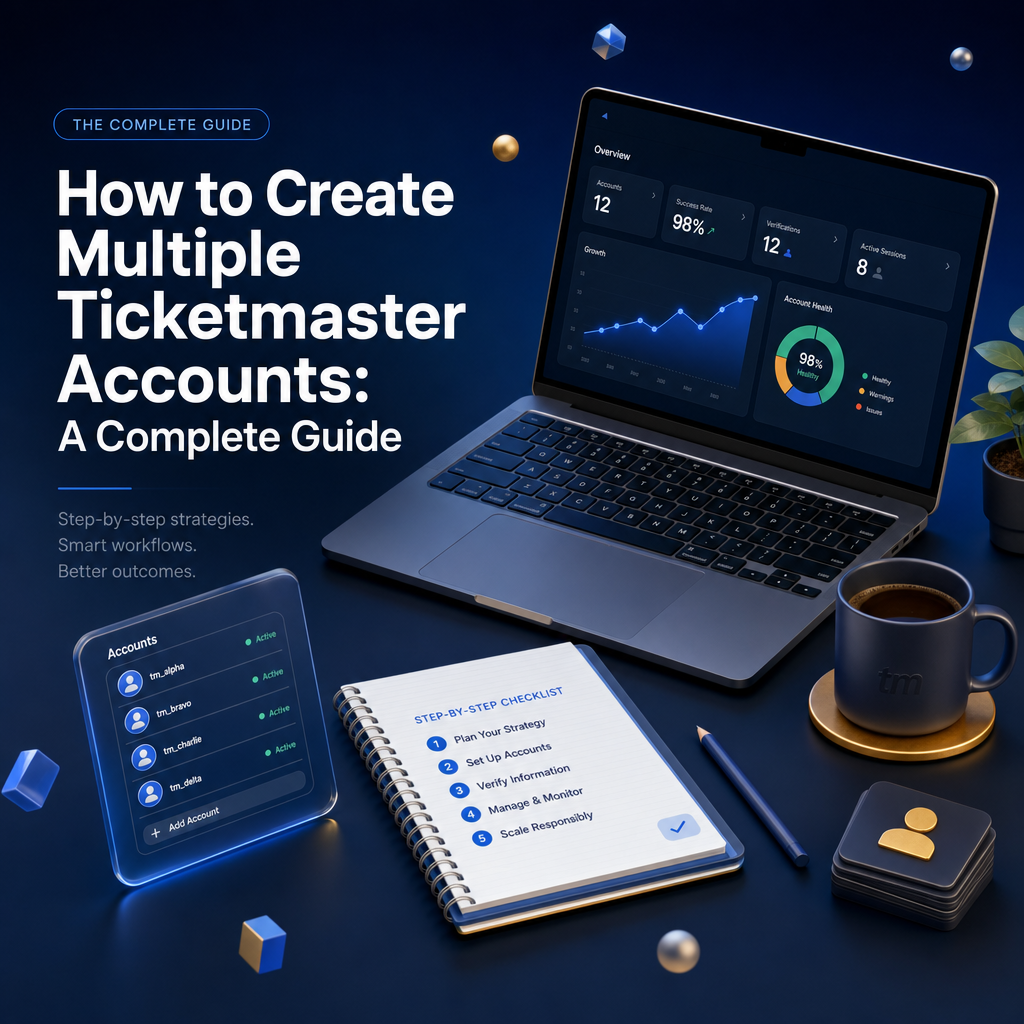
Most onsales enforce a purchase limit, commonly two to eight tickets per account, per card, or per household, and the limit is set per event. Trying to circumvent that limit with multiple accounts on a restricted event is a common cause of cancellations. If you operate at volume across many genuine accounts, the operational challenge is keeping each account verified and organized. Managing buyer accounts and capturing the verification codes (OTP) that arrive by email and SMS is tedious by hand. The ProTickets Inbox is built to centralize that: it manages your buyer accounts and captures OTP and presale codes from email and SMS (included on Pro for up to 100 accounts, Premium up to 1,000).
Where do verified buyer names and addresses come from?
Brokers operating across many marketplaces need clean, real account details that match the payment method to avoid fraud flags. Mismatched or junk data is one of the fastest ways to trigger a cancellation or a payment hold. ProTickets includes a buyer account generator that produces real verified names and addresses worldwide, which keeps account creation consistent and reduces the data-mismatch problems that get orders flagged.
Selling and platforms
What are the best platforms to sell tickets on?
The major resale marketplaces each have tradeoffs:
- StubHub: the largest reach and high buyer trust, but seller fees are on the higher side.
- SeatGeek: strong app experience and good discovery, competitive fees, popular for sports.
- Vivid Seats: large audience and an active rewards program that drives repeat buyers.
- TickPick: a no-buyer-fee model that can mean better net pricing dynamics for sellers.
- Ticketmaster verified resale: lists directly where many buyers already are, with the trust of the primary platform, though policies and payout timing are stricter.
Many resellers list across several at once to maximize exposure, then delist quickly when one sells. Just be careful never to double-sell the same ticket.
How should I price my tickets?
Price against the live market, not your hopes. Look at what comparable seats are currently listed for, where the floor is, and how the price has trended as the event approaches. Many events peak in price during the initial demand surge, soften in the middle, and then either spike again last-minute (hot events) or collapse (weak ones). Repricing matters: a listing left static for weeks usually loses to sellers who adjust. This is where seeing real pricing ranges and historical trends pays off, and why a price view that shows each seat colored by its exact price (the Price HeatMap in the ProTickets Chrome extension) is useful for reading a section at a glance.
When is the best time to sell?
There is no single rule, because it depends on the event. Truly scarce events (small venue, hot artist, sold-out onsale) often climb right up to event day, so patience pays. Softer events tend to bleed value the closer you get, so selling earlier protects you. The skill is telling the two apart, and that is a demand-data question. Watching availability and price movement over time, rather than guessing, is what keeps you from holding a winner too short or a loser too long.
Does ProTickets list or sell tickets for me?
No. ProTickets is a data and operations toolkit, not a marketplace. It does not auto-list or auto-sell your inventory, and it does not place listings on your behalf. What it does is give you the market data, presale access, monitors, and account tooling to make better buying and selling decisions. You still list and sell on the marketplaces yourself.
Risk and money
What are the biggest risks in ticket reselling?
The four that actually hurt:
- Unsold inventory: tickets that never sell, or sell below cost. This is the number one profit killer.
- Cancellations: the primary seller voids your order for breaking purchase rules, leaving you on the hook for a sale you cannot fulfill.
- Account suspensions: marketplaces or primary sellers freeze accounts they flag as resale or bot activity.
- Payment holds and chargebacks: payouts delayed or clawed back, sometimes weeks after the sale.
Every one of these is manageable with good event selection, rule compliance, and clean account hygiene.
How do I avoid getting my tickets cancelled?
Cancellations almost always trace back to a broken rule or a data mismatch. To minimize them: respect per-event purchase limits, use accounts with consistent and accurate buyer details that match the payment method, avoid hammering a single onsale from many accounts on the same device, and do not use bots. The cleaner and more human-looking your purchasing is, the less likely an order gets voided. Keeping buyer account data clean and verification organized is a big part of staying under the radar in a legitimate way.
What are chargebacks and how do I protect against fraud?
A chargeback happens when a buyer disputes a charge with their bank, and on the buyer side it can claw back money even after a sale settles. As a seller, the marketplace usually mediates, which is one reason to sell through reputable platforms with seller protection rather than informal channels. On the buying side, fraud risk comes from sketchy resold codes or accounts. Protect yourself by transacting through established marketplaces, keeping documentation of every purchase, and never paying for tickets through untraceable methods.
What happens if my account gets suspended, and can I recover it?
Suspensions range from temporary holds to permanent bans. Recovery is possible but not guaranteed. Start by contacting support with calm, specific information: order numbers, proof of legitimate purchase, and verification of your identity. If the suspension was triggered by a misunderstanding (a flagged but legitimate purchase, an address mismatch), documentation often resolves it. If it was for a genuine terms violation, recovery is much harder. The best defense is prevention: keep accounts clean, verified, and rule-compliant so they never get flagged in the first place.
Why are my payouts held, and how long does payment take?
Marketplaces commonly hold payouts until after the event happens, to protect buyers in case of a fulfillment problem. New sellers and high-value sales often face longer holds. This is normal, but it means your cash is tied up longer than the sale date suggests, so plan your bankroll around delayed payouts rather than instant ones. Build that lag into your cash-flow planning so you are never forced to fire-sale inventory to cover expenses.
Tools, data, and ethics
What data should I look at before buying?
Before you commit capital, you want a read on availability, current pricing ranges, and historical trends for similar events. Availability tells you scarcity, pricing ranges tell you the realistic ceiling and floor, and history tells you how comparable shows behaved over time. ProTickets aggregates market data across 250,000+ events at 50,000+ venues, which is the kind of breadth that lets you compare an event you are considering against dozens of similar past ones instead of guessing.
What does the Price HeatMap actually do?
The Price HeatMap is part of the ProTickets Chrome extension, and it colors each seat by its exact price. Instead of clicking individual seats to learn what a section costs, you see the whole map shaded by price, which makes it fast to spot underpriced pockets, understand how a venue is priced top to bottom, and judge where your own listing would sit. For pricing decisions and for finding value on the buy side, seeing the full picture at a glance beats sampling seats one by one.
What are monitors and why do resellers use them?
Monitors track availability and price moves over time so you do not have to refresh pages manually. They tell you when seats open up (drops and releases happen), when prices shift, and when a soft event is starting to slide so you can reprice. For a reseller juggling many events, monitors turn constant manual checking into automatic alerts, which is the difference between catching a price move and finding out too late. ProTickets monitors track availability and price movement so you can act on changes instead of discovering them after the fact.
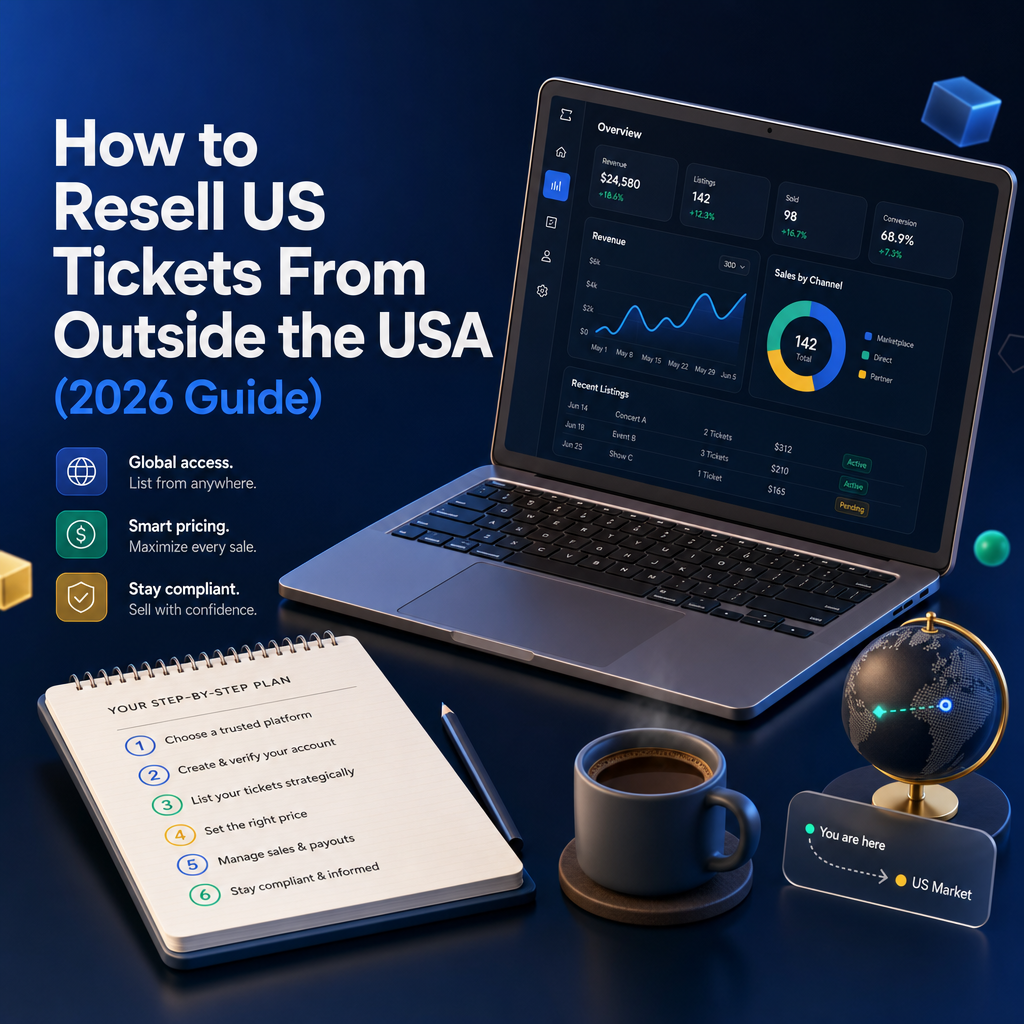
Can I resell tickets from outside the USA?
Yes, reselling is a global activity, and many brokers operate across multiple countries' marketplaces. The catch is that buyer details, payment methods, and addresses need to match the region you are buying in, or orders get flagged. This is one reason the ProTickets buyer account generator produces real verified names and addresses worldwide, so resellers working internationally can keep account data clean across regions. Rules and platform policies differ by country, so research the local resale laws wherever you operate.
What plans does ProTickets offer?
There are three tiers: Lite at $9.99/mo, Pro at $29.99/mo, and Premium at $99.99/mo. The Inbox feature that manages buyer accounts and captures OTP and presale codes is included on Pro for up to 100 accounts and on Premium for up to 1,000. Which tier fits depends on how many accounts you run and how much of the data, presale, and monitoring toolkit you need. There is also a community on Discord for resellers using the platform.
Is ticket reselling ethical, and can it be sustainable?
This is a fair question, and reasonable people disagree. Reselling provides real value: it creates a liquid secondary market so fans who could not buy at onsale still have a path to attend, and it lets people recoup costs when plans change. The ethical line, for most, is about method and restraint: do not use bots, do not violate venue rules that harm fans, do not deceive buyers, and price fairly rather than gouging on truly captive demand. Treated as a legitimate business with honest pricing and clean practices, reselling can be sustainable and defensible. Treated as a rule-breaking grab, it invites cancellations, bans, and regulation. The resellers who last are the ones who play it straight.
Reselling rewards preparation more than luck. The operators who do well are organized about presales, disciplined about event selection, honest about taxes and rules, and ruthless about cutting losers early. If you want the data, presale access, monitors, and account tooling to do that the right way, explore ProTickets and build your workflow around good information instead of guesswork.
Related articles
Ready to become a ticket broker?
Join ProTickets and get access to pro-grade tools, live data, and insider strategies trusted by top resellers.
Get started for free